Nov 2025 – Jun 2026
Enterprise B2B sourcing platform for industrial and automotive parts, combining intelligent search, supplier integrations, and automated catalog management to streamline procurement at scale.
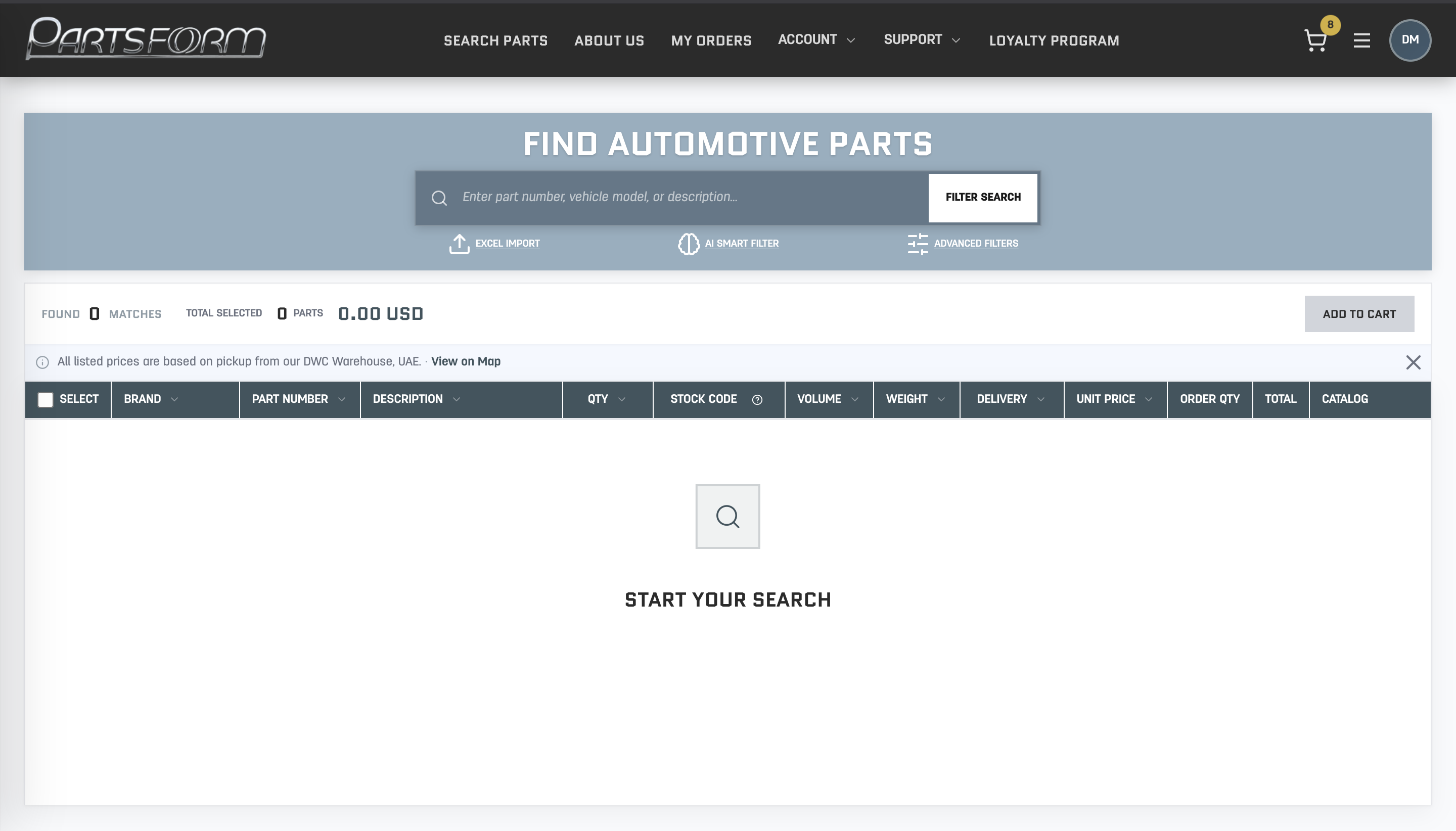
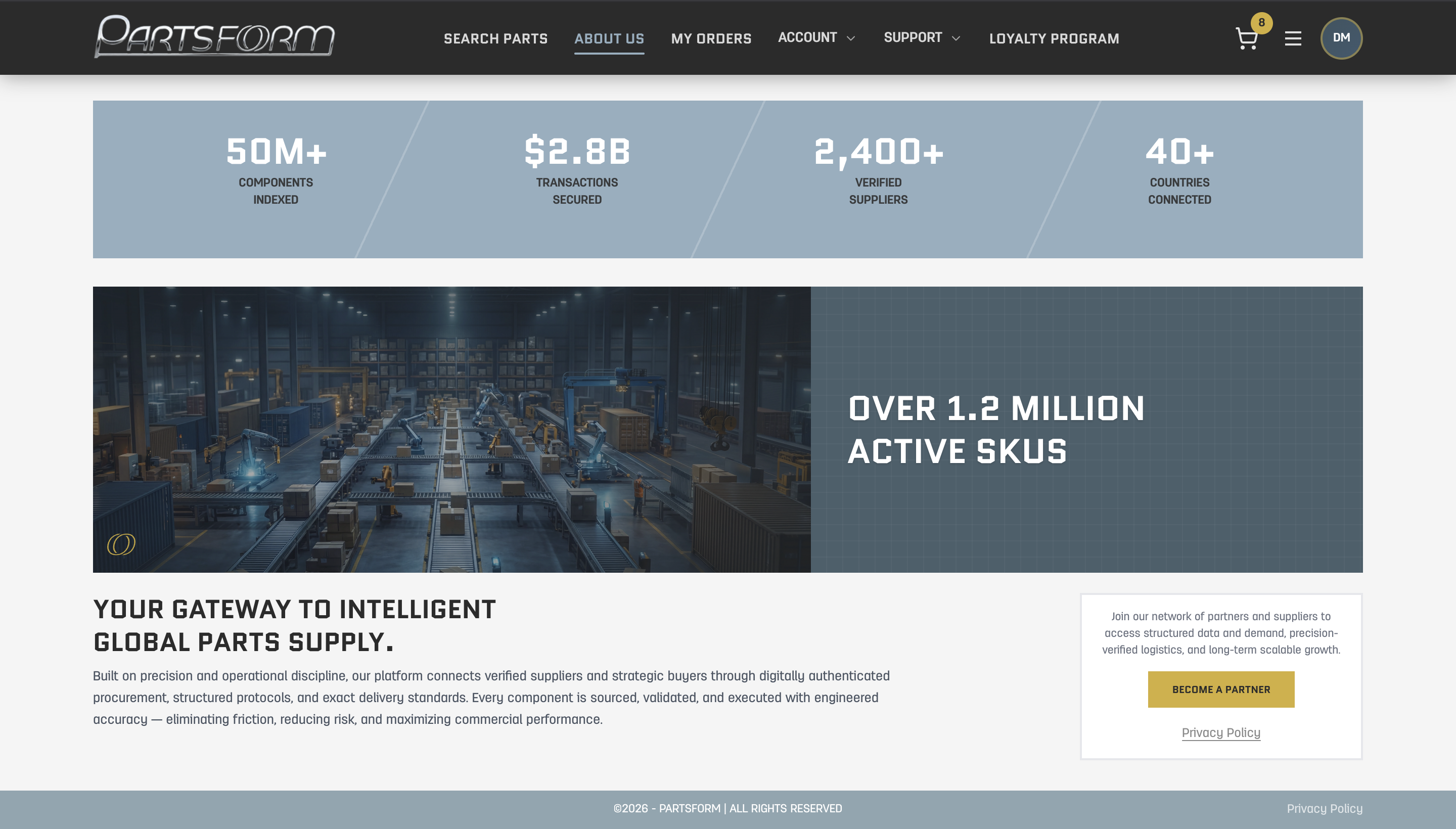
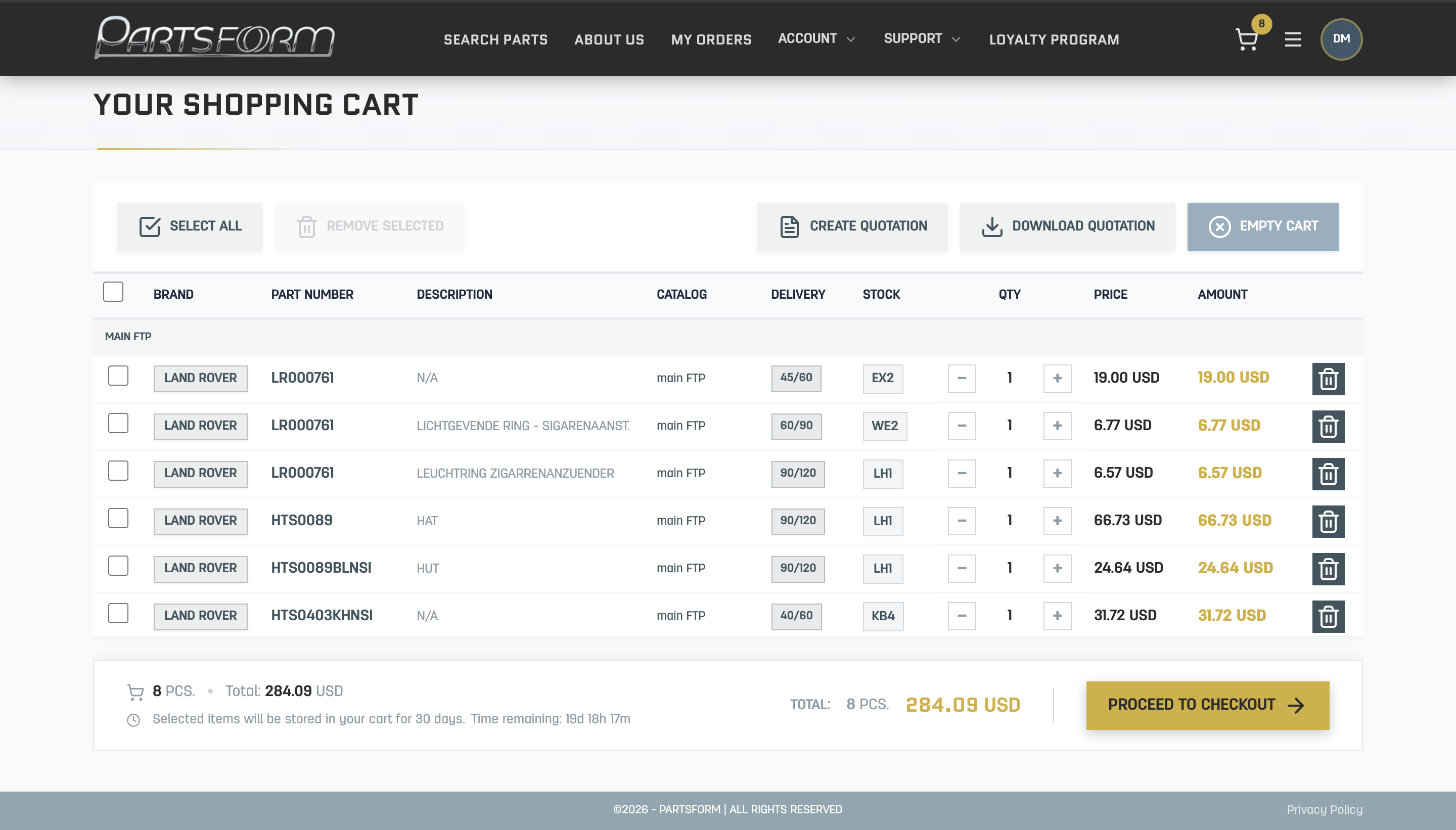
PartsForm is a B2B sourcing and procurement platform built for the industrial and automotive parts industry. The platform brings buyers, suppliers, and operations teams into a single ecosystem where parts can be discovered, compared, ordered, and managed at scale. Buyers can search millions of SKUs using AI-assisted search, manage carts and orders, track deliveries, and submit support requests. Suppliers can upload and maintain catalogs through self-service tools, bulk imports, and FTP integrations, while administrators oversee orders, users, payments, integrations, analytics, and synchronization processes from a centralized dashboard. The platform was designed to replace fragmented workflows that rely on spreadsheets, email chains, and disconnected supplier catalogs. The goal was to create a scalable procurement solution capable of handling large product datasets, complex supplier networks, and global sourcing operations. Key Goals Centralize sourcing, ordering, and catalog management. Support millions of products without compromising search performance. Automate supplier onboarding and catalog synchronization. Reduce operational overhead through integrations and workflow automation. Deliver a global-ready experience with multilingual and multi-currency support.
Industrial procurement comes with significant complexity. Suppliers provide catalog data in different formats, product information is often inconsistent, and buyers expect fast and accurate search results across massive inventories. The biggest challenge was balancing scale and performance. The platform needed to index and search millions of records while supporting long-running catalog imports, synchronization jobs, and supplier integrations without affecting the buyer experience. Additional challenges included maintaining data consistency across multiple data sources, supporting supplier-specific permissions, handling large file imports, and building a system capable of serving international users across multiple languages and regions. To solve this, the architecture separates search, synchronization, and ingestion workloads from the main application, ensuring heavy background processing never impacts user-facing operations.
The platform was built with Node.js, Express, MongoDB, Elasticsearch, Redis, and Socket.IO to support high-volume procurement workflows and large-scale catalog management. MongoDB serves as the system of record, storing products, orders, users, and operational data. Elasticsearch powers fast product discovery across millions of SKUs, while Redis improves performance through caching and inter-service communication. Real-time updates are handled through Socket.IO for notifications, support workflows, and operational events. To maintain performance under heavy workloads, catalog synchronization and FTP processing run in dedicated PM2 workers, allowing imports and background jobs to operate independently from the web application. AI capabilities powered by Gemini and Groq enhance product discovery, search understanding, and data processing, while integrations such as FTP, email ingestion, and automated synchronization reduce manual operational effort. Architecture Philosophy The platform follows a simple principle: MongoDB stores the truth, Elasticsearch powers discovery, and background workers handle heavy processing. This approach allows PartsForm to continuously process large supplier catalogs while maintaining fast search performance and a responsive user experience.
Every feature designed with purpose, precision, and real-world usage in mind.
Accelerates industrial sourcing through AI-assisted search, intelligent part matching, and natural-language queries across millions of SKUs, reducing search friction and improving procurement efficiency.
High-performance Elasticsearch architecture delivering fast and accurate product discovery at scale, with resilient fallback mechanisms that maintain platform availability during search service interruptions
Centralized catalog ingestion framework supporting supplier uploads, bulk imports, and FTP-based data exchange, enabling continuous synchronization of large-scale product inventories.
Unified integration engine connecting FTP servers, APIs, spreadsheets, and external supplier systems through automated synchronization workflows designed for high-volume data operations.
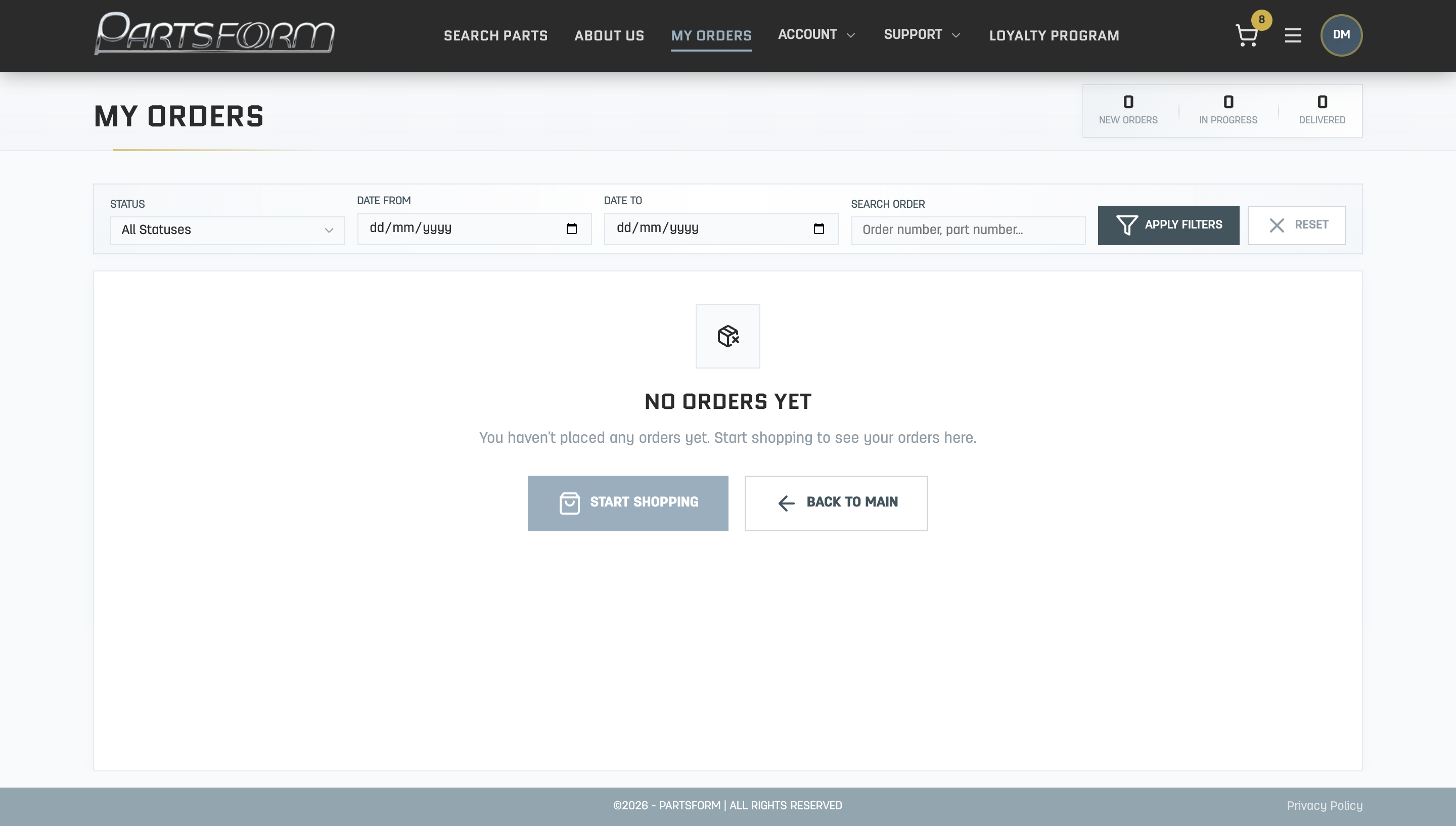
End-to-end procurement workflows covering product discovery, quotations, checkout, order management, payment processing, and fulfillment tracking within a single platform.
Dedicated portals for buyers, suppliers, referral partners, and administrators, providing role-specific experiences while maintaining centralized operational control.
Designed for international markets with multilingual support, RTL compatibility, geo-aware localization, and multi-currency capabilities to support global supplier and buyer networks.
Live notifications, support workflows, and operational event streaming enable teams to monitor activities and respond to critical events without delays.
Role-based access control, secure authentication, permission management, rate limiting, and production-grade security controls built for enterprise procurement environments.
Worker-based architecture separates user-facing operations from catalog synchronization, FTP processing, and data-intensive workloads, ensuring platform responsiveness under heavy load.
Centralized dashboards provide visibility into orders, supplier activity, catalog health, integrations, operational performance, and platform analytics.
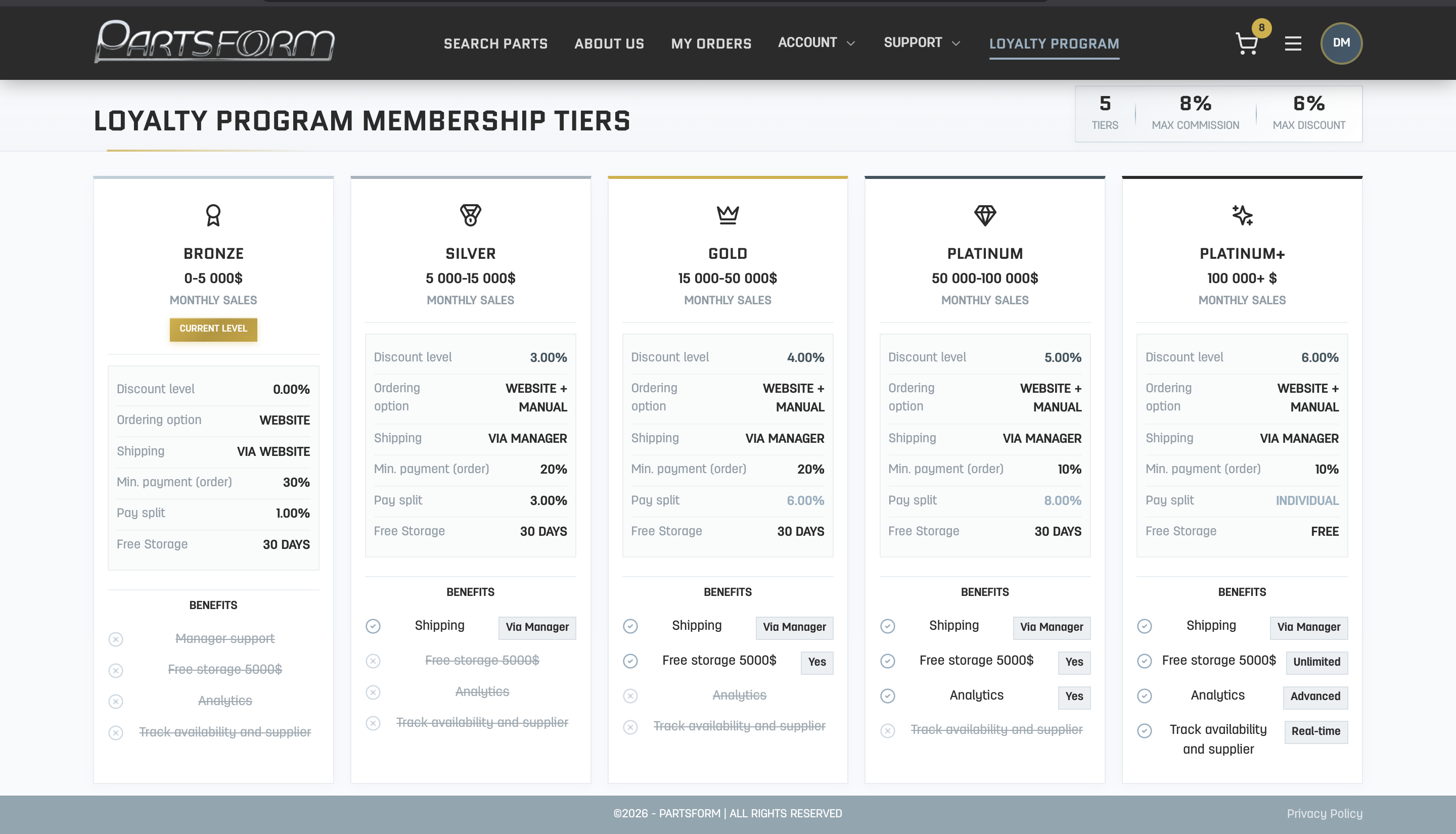
Integrated referral and commission management system supporting partner-driven growth strategies, affiliate relationships, and automated commission tracking.
A unified suite of enterprise modules designed to streamline sourcing, supplier collaboration, catalog management, procurement operations, and global commerce through a single platform.
A multi-stage search pipeline where Google Gemini handles query understanding and intent detection, while Elasticsearch performs fast retrieval across large product indexes. The system supports natural language, part numbers, and manufacturer-based search, with continuous relevance improvement based on user behavior. MongoDB fallback ensures stability if the search index is unavailable.
Handles large-scale catalog ingestion from FTP, APIs, Google Sheets, and portal uploads. Processing is isolated in background workers to protect the main application. Data is normalized into MongoDB and reindexed into Elasticsearch with safe, idempotent operations.
A complete procurement workflow covering cart, checkout, orders, payments, and post-purchase support. Orders are stored as immutable snapshots to ensure consistency. Supports multi-currency pricing, tiered discounts, referral logic, and automated quotation generation.
A complete procurement system that handles the full lifecycle of industrial purchasing. Buyers can search, add items to cart, generate quotations, place orders, track fulfillment, and manage post-purchase claims within a unified workflow optimized for B2B transactions.
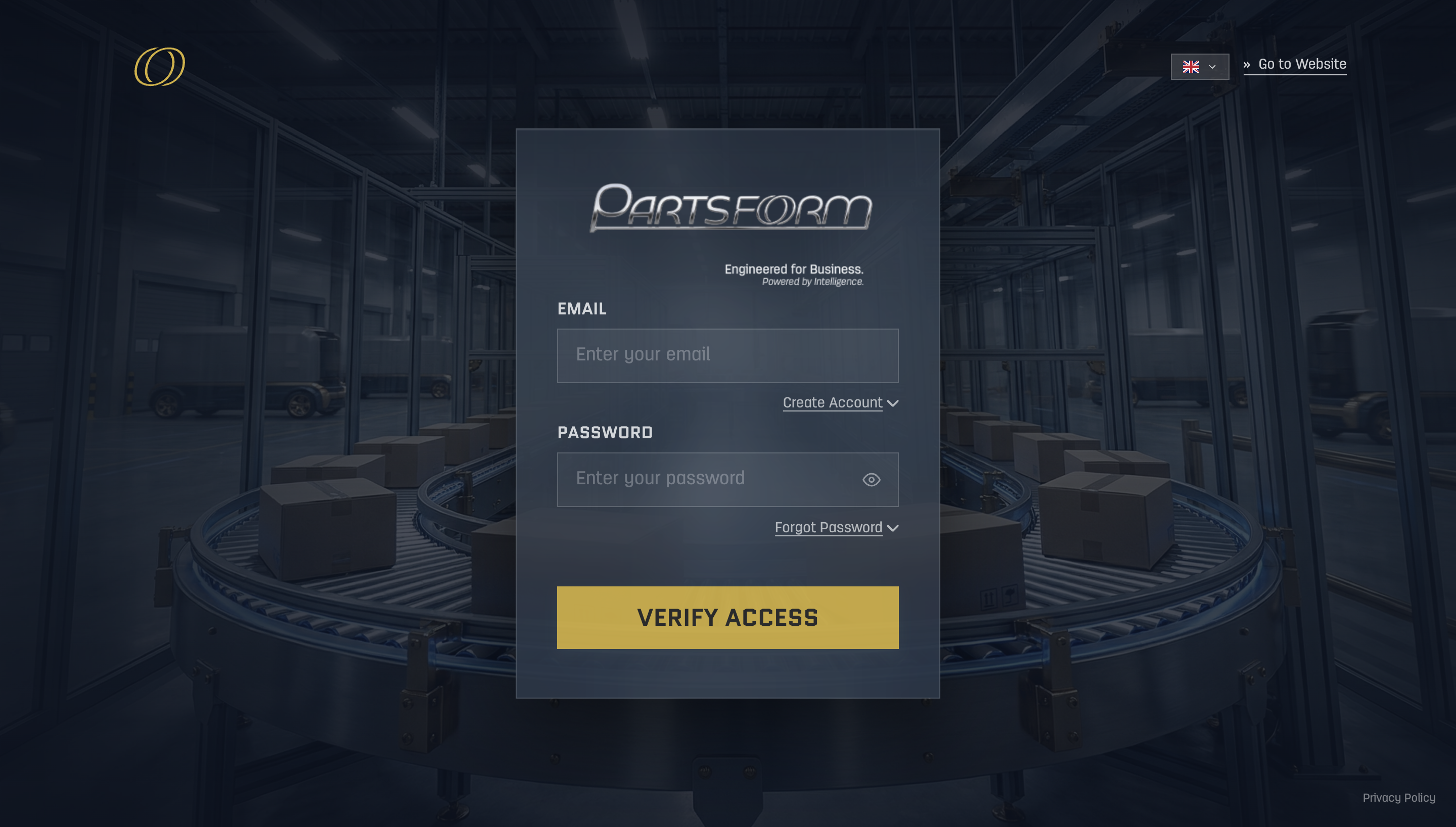
Provides full administrative control over users, orders, suppliers, integrations, and platform health. Real-time updates are powered by Socket.io, while IMAP handles inbound RFQ emails. Role-based authentication separates buyer, supplier, admin, and partner access.
Real numbers from real deployment — results that speak for themselves.
Next step
Tell us about your product, timeline, and goals — we'll respond with a clear plan and honest timeline.